

Market
Define the buyer, market context, and problem category clearly.
Framework
A structure for aligning market, offer, and narrative so the business is easier to understand, trust, and buy from.
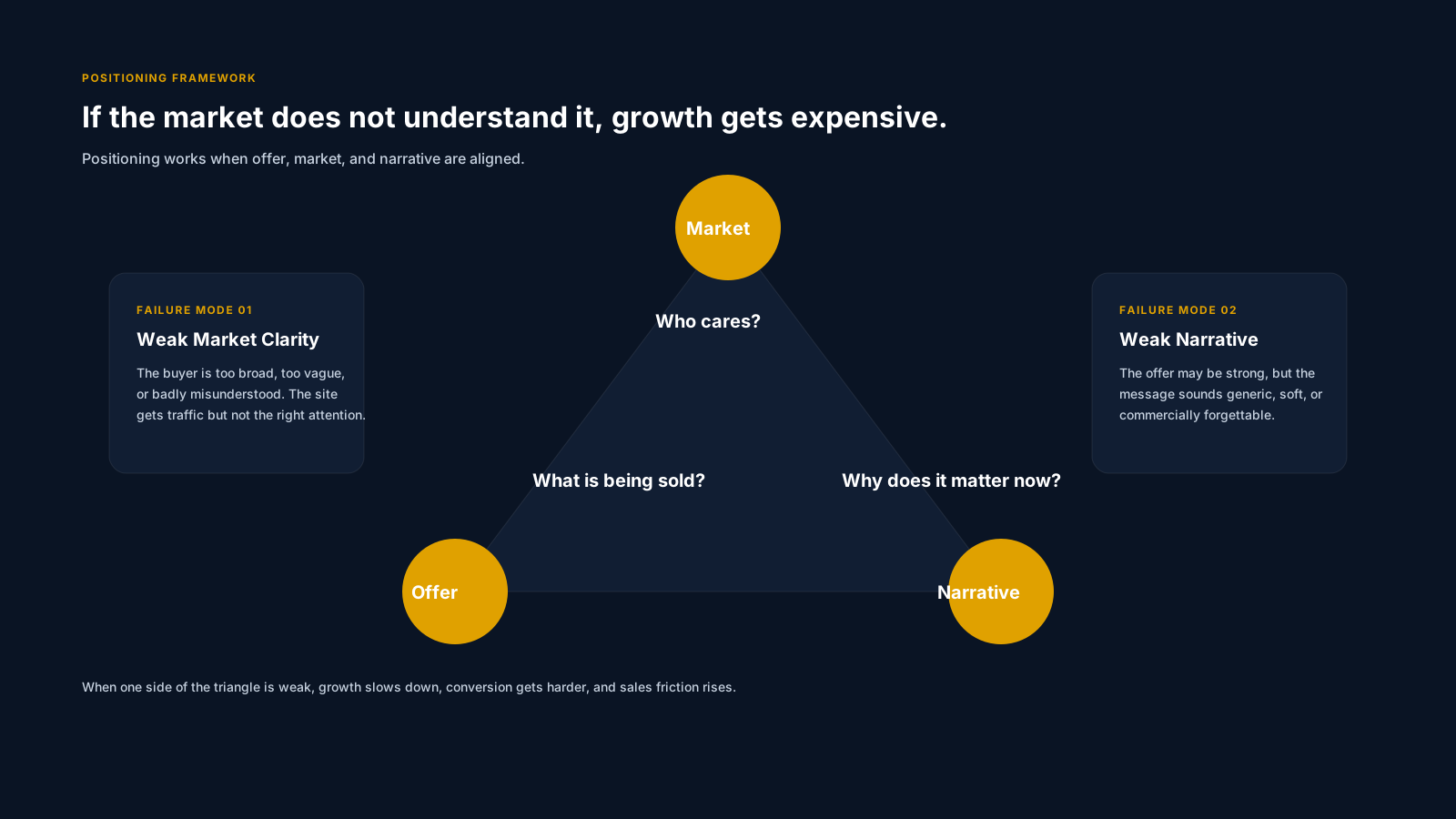
The Positioning Framework aligns market reality, the offer, proof, and narrative so buyers can understand what the company does and why it is credible.
When the company sounds like everyone else, every sales conversation starts too far back and every marketing channel becomes more expensive.
Positioning has to connect market, offer, proof, and narrative. This diagram exists to show why better words are not enough unless the underlying commercial logic is aligned.
Define the buyer, market context, and problem category clearly.
Clarify what is being sold, how it is structured, and what it is designed to change.
Decide what evidence is real, usable, and commercially relevant.
Build the message hierarchy that explains differentiation and why action should happen now.
Make sure the site, sales language, and authority content all reinforce the same position.
Positioning becomes useful when it drives the site, the proof hierarchy, the sales language, and the authority content. That is why this framework sits upstream of the rest of the commercial system.